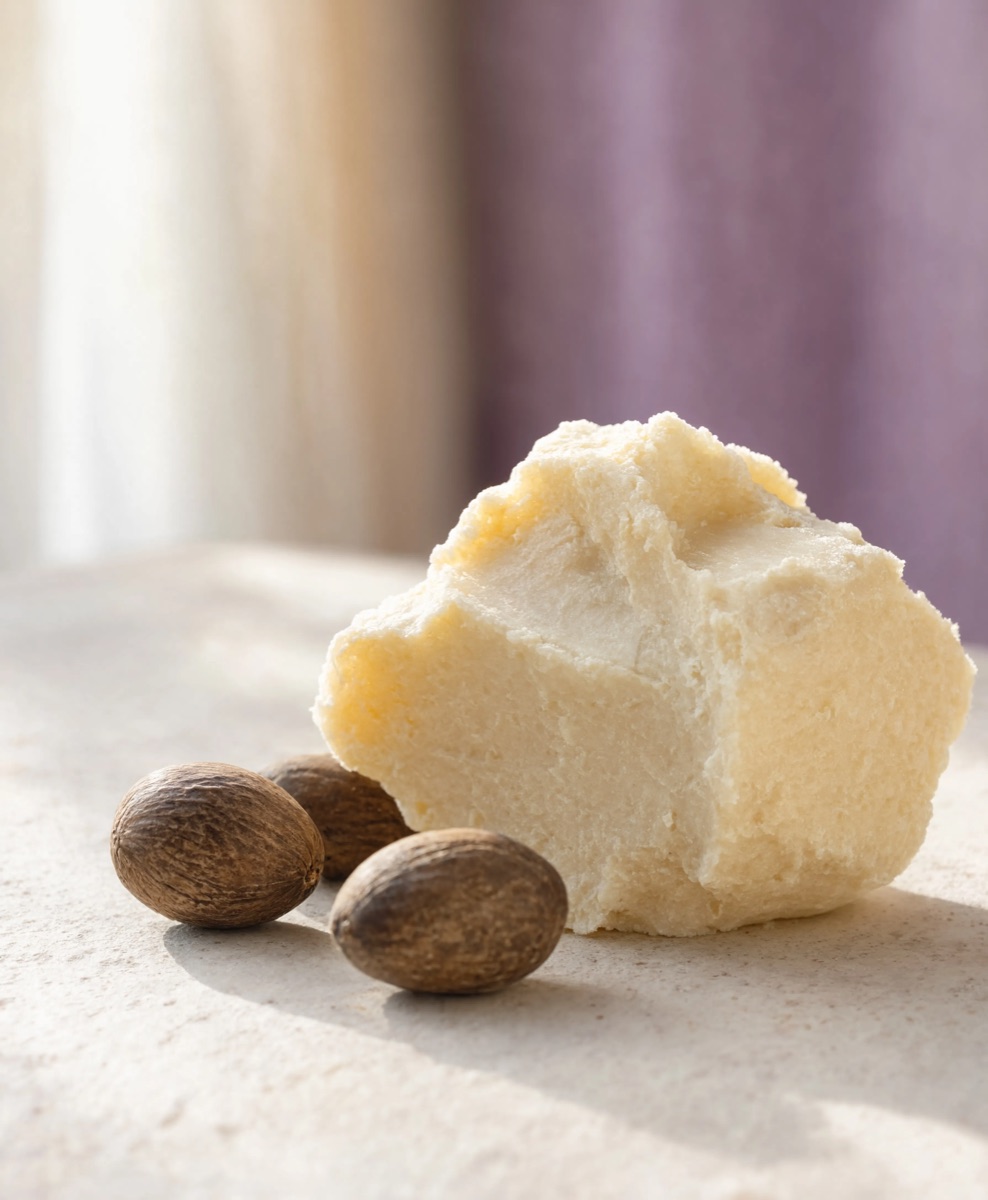
 Raw, unrefined shea butter. Photo: Zak Raha / Wikimedia Commons (CC BY 4.0)
What is shea butter?
Shea butter is a rich, creamy fat pressed from the nuts of the shea tree, which grows across West Africa. Women there have made and used it for centuries: for skin, for hair, for newborns, for everything. It's one of the oldest skincare ingredients in the world, and one of the few that has never needed improving.
At room temperature it's a soft solid. Near body temperature it melts. That low melting point is the secret: it glides on, sinks in, and doesn't sit on top of your skin like a wax would.
What shea butter does for skin
Shea butter earns its place at the front of our ingredient list for a few simple reasons:
- Deep, lasting moisture. Shea is packed with fatty acids, mainly oleic and stearic acid, that soften skin and help it hold water instead of losing it to the air.
- A natural barrier. It leaves a light, breathable layer that helps protect skin from wind, dry air, and everyday wear. That's why hands, elbows, knees, and feet love it most.
- Softness you can feel. Rough, flaky patches drink it in. With regular use, skin feels smoother and more supple.
- Gentle by nature. Pure shea contains no water, so it needs no preservatives. What's in the jar is just the butter itself.
Raw shea vs. refined shea
Not all shea butter is the same, and the label matters more than most people realize.
Raw (unrefined) shea is extracted, filtered, and left alone. It keeps its natural ivory color, its faint nutty scent, and the full range of vitamins and plant compounds it grew with.
Refined shea is processed with high heat, and often chemical solvents, to strip out the color and smell so it can sit on a shelf for years. The result is whiter, blander, and missing part of what made it worth using.
SARMARI'S only uses raw shea. It's why our butters have a natural, subtle character of their own, and why the color can vary slightly from batch to batch. Real ingredients look like that.
Why we whip it
Straight shea butter is dense: beautiful, but stiff to scoop and slow to spread. Whipping folds air into the butter along with our cold-pressed oils (coconut, avocado, grapeseed, castor, olive, and cocoa butter), turning it soft as silk. Nothing is added to make that happen. It's texture, not chemistry.
The payoff: a butter that melts on contact, spreads further, and absorbs faster, while keeping every bit of shea's moisturizing power. If you want the full story, read our guide to what whipped body butter is and how to use it.
How to get the most from shea butter
- Apply to damp skin. Right after a shower, while skin still holds water, is the best moment. The butter seals that moisture in.
- Start small. A fingertip's worth covers more than you'd think. Warm it between your palms first.
- Focus on the dry spots. Hands, heels, elbows, knees: anywhere skin works hardest.
- Patch test first. Shea is a tree nut derivative. If you're new to it, test on your inner arm for 24 to 48 hours.
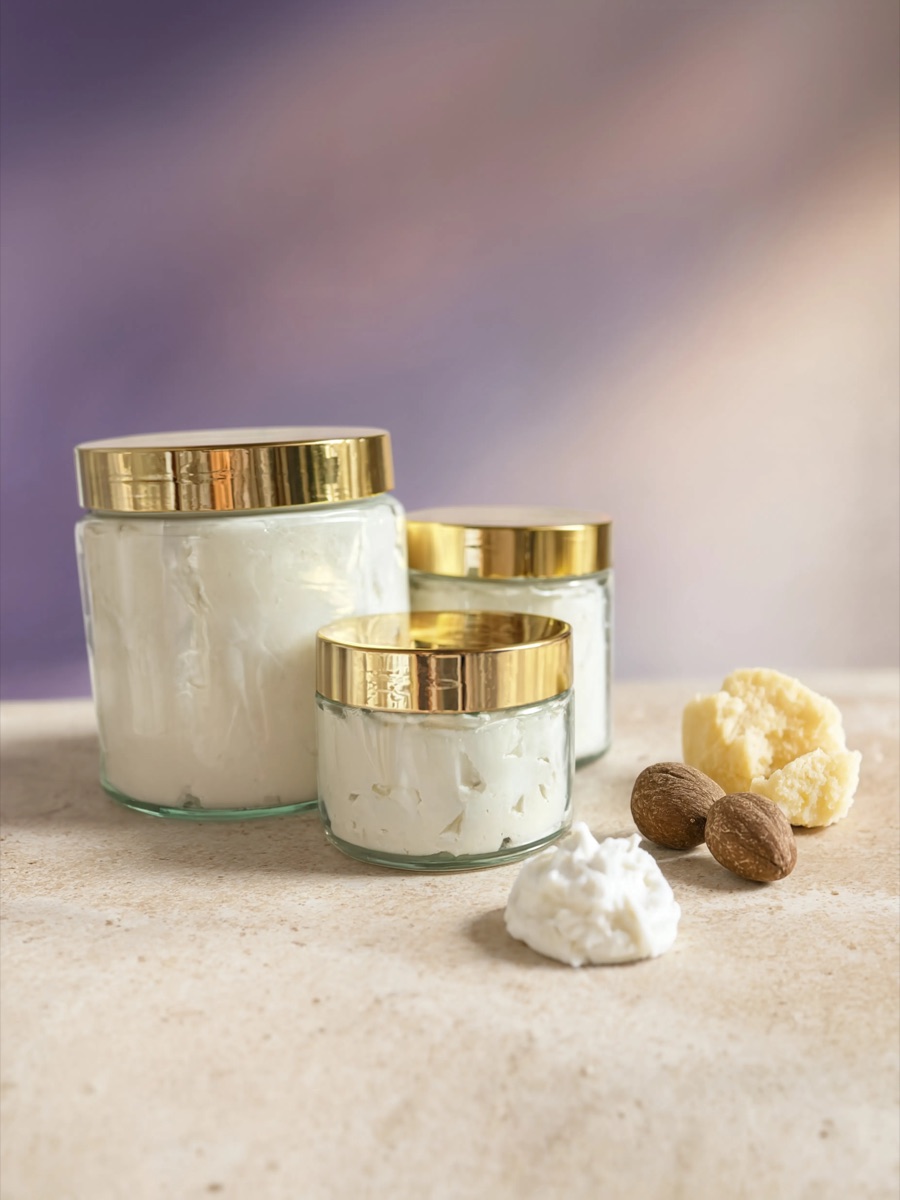
Whipped Body Butter
Shea Blend
Pure whipped shea, nothing else hiding in it. From $15.
Shop →
Where you'll find shea in our collection
Raw shea butter is the base of every whipped butter we make: Shea Blend, Citrus Blend, Coco Vanilla, Relaxation Blend, and Earthy Scent. It also softens every bar of our Oatmeal Soap. Each scent simply adds its own essential oils to the same shea-rich base.
Questions people ask
Is shea butter good for dry skin?
Yes. It's one of the richest natural moisturizers there is, full of fatty acids that soften skin and help it hold on to moisture. That's exactly why it's the base of every SARMARI'S whipped butter.
What's the difference between raw and refined shea butter?
Raw shea is simply extracted and filtered, keeping its natural color, scent, and skin-loving compounds. Refined shea is processed with heat and sometimes chemicals to strip color and smell, which removes part of what makes shea worth using.
Can I use shea butter if I have a nut allergy?
Shea comes from the nut of the shea tree, so it is a tree nut derivative. Patch test on your inner arm for 24 to 48 hours before full use, and check with your doctor if you're unsure.
Why did my shea butter soften or melt?
Shea melts near body temperature, which is why it glides into skin so easily. If a jar softens in warm weather, a few minutes in the fridge brings the whipped texture right back. Nothing about it has gone bad.
This page shares general information about cosmetic ingredients. It isn't medical advice, and our products aren't intended to diagnose, treat, cure, or prevent any condition. If you have a skin concern, talk with your doctor or dermatologist.