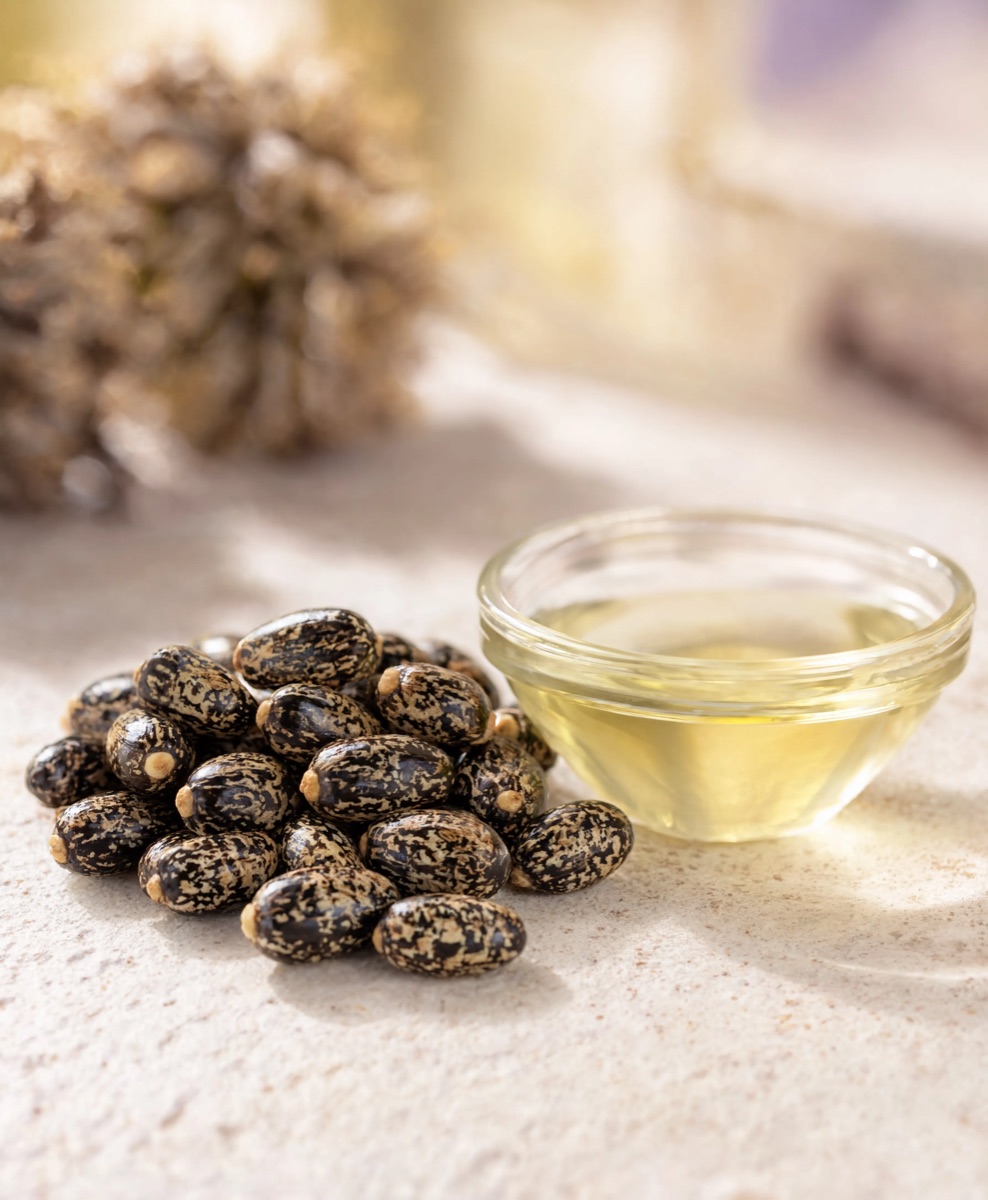
 Castor seeds, the source of one of skincare's thickest natural oils. Photo: Wikimedia Commons (public domain)
What is castor oil?
Castor oil is pressed from the seeds of the castor plant, and people have been putting it on skin for thousands of years. Ancient Egyptians used it. Your grandmother probably kept a bottle somewhere. It has stayed in use that long for one simple reason: nothing else feels quite like it.
Pour most plant oils and they run like water. Pour castor oil and it moves slowly, thick and glossy, closer to honey than to oil. That unusual body comes from ricinoleic acid, a fatty acid that castor oil carries in amounts almost no other plant oil can match.
What castor oil does for skin
In a SARMARI'S jar, castor oil has one main job, and it does it well:
- It helps seal moisture in. Castor oil forms a soft, protective layer on the surface of skin. Moisture that would otherwise escape into dry air stays where it belongs.
- It clings. Lighter oils absorb and move on. Castor oil lingers, which is why the softness from a whipped butter lasts hours instead of minutes.
- It adds glow. That glossy body translates to a low, healthy-looking sheen on skin, never a greasy shine when it's properly blended.
- It stretches the blend. A little castor oil makes every scoop of butter go further, because it slows everything down and spreads the moisture out over time.
A little goes a long way
Castor oil is potent by texture. A few drops of the pure oil will coat an entire hand, and a heavy pour would leave anything feeling tacky. That's why you'll rarely see it used alone, and why the amount matters as much as the ingredient itself.
In our whipped butters, that measuring is already done. Castor oil appears in exactly the proportion that seals moisture in without ever announcing itself. You feel the result, not the ingredient.
Why we balance it with lighter oils
A blend made only of rich, heavy ingredients would feel like paste. So our whipped base pairs castor oil with oils from the other end of the scale: grapeseed, one of the lightest and fastest-absorbing oils in skincare, and coconut, which melts and sinks in on contact. Raw shea butter holds the middle, bringing the deep moisture the whole blend is built around.
The light oils absorb quickly and carry moisture in. The castor oil stays near the surface and keeps that moisture from escaping. Nothing feels heavy, because nothing is doing more than its share. Our guide to whipped body butter explains how the whole recipe fits together.
You can feel that balance in every scent we make. The Citrus Blend is a good place to start: bright lemongrass and orange up top, with the same quietly working base underneath.
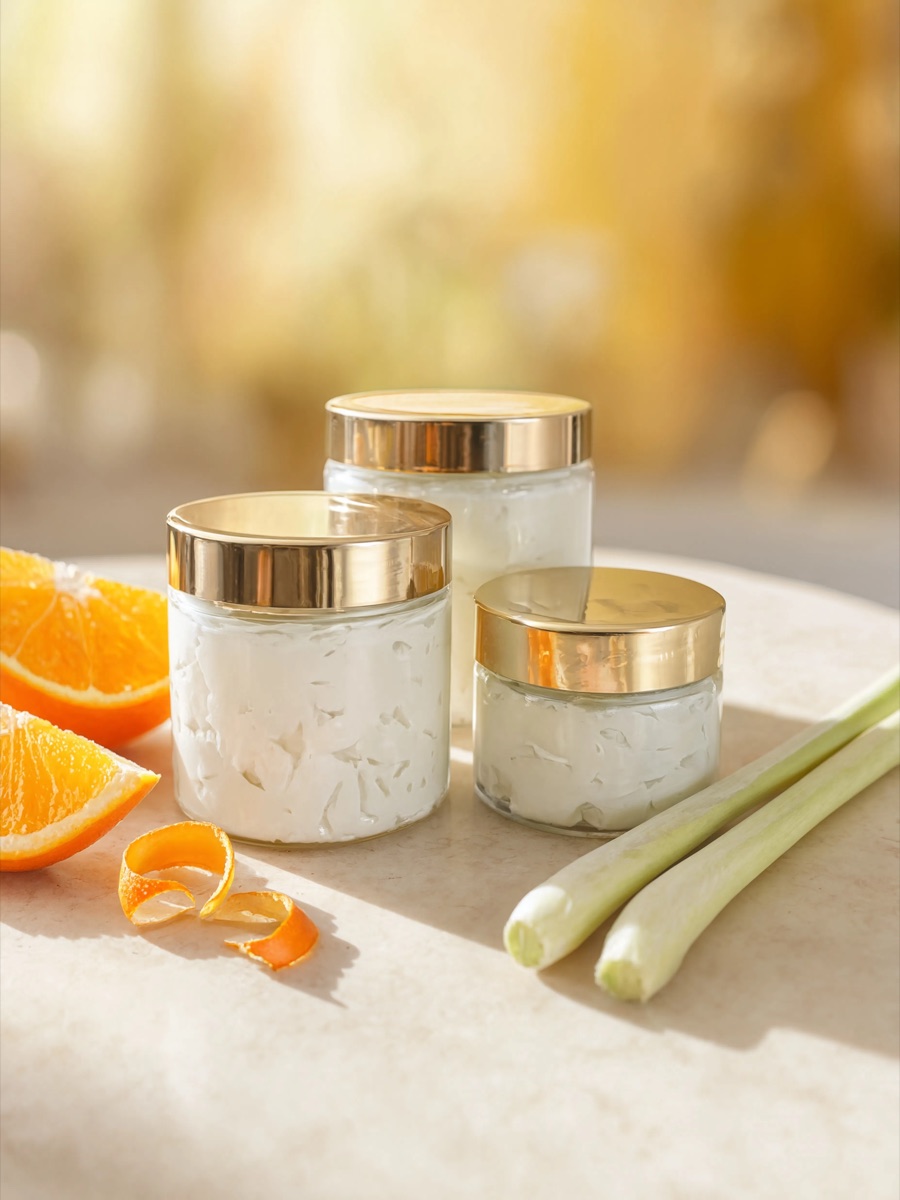
Whipped Body Butter
Citrus Blend
Bright, clean, awake. From $15.
Shop →
How to get the most from castor oil
- Apply over damp skin. Castor oil seals in whatever moisture is already there, so give it something to seal. Right after a shower is ideal.
- Target the toughest spots. Heels, elbows, knuckles, and cuticles are where a moisture-sealing oil earns its keep.
- Trust small amounts. If your skin feels coated, you used too much. Softness should be the only evidence.
- Patch test first. As with any new ingredient, test on your inner arm for 24 to 48 hours before regular use.
Questions people ask
Is castor oil good for dry skin?
Yes. Castor oil is one of the thickest natural oils in skincare, and that thickness is the point. It forms a soft protective layer that helps skin hold on to the moisture it already has, which makes it a natural fit for dry hands, heels, and elbows.
Why is castor oil so thick?
Castor oil is unusually rich in ricinoleic acid, a fatty acid that gives the oil its dense, glossy, almost honey-like body. Most plant oils pour like water. Castor oil pours slowly, clings to skin, and stays where you put it.
Will castor oil make my skin feel heavy or sticky?
On its own, it can. That's exactly why we never use it alone. In our whipped butters, castor oil is balanced with lighter oils like grapeseed and coconut, so you get its moisture-sealing benefit without any heavy, tacky feel.
How much castor oil should I use?
Very little. A few drops of pure castor oil cover a whole hand, and in a whipped butter the measuring is already done for you. If you're new to it, patch test on your inner arm for 24 to 48 hours before regular use.
This page shares general information about cosmetic ingredients. It isn't medical advice, and our products aren't intended to diagnose, treat, cure, or prevent any condition. If you have a skin concern, talk with your doctor or dermatologist.