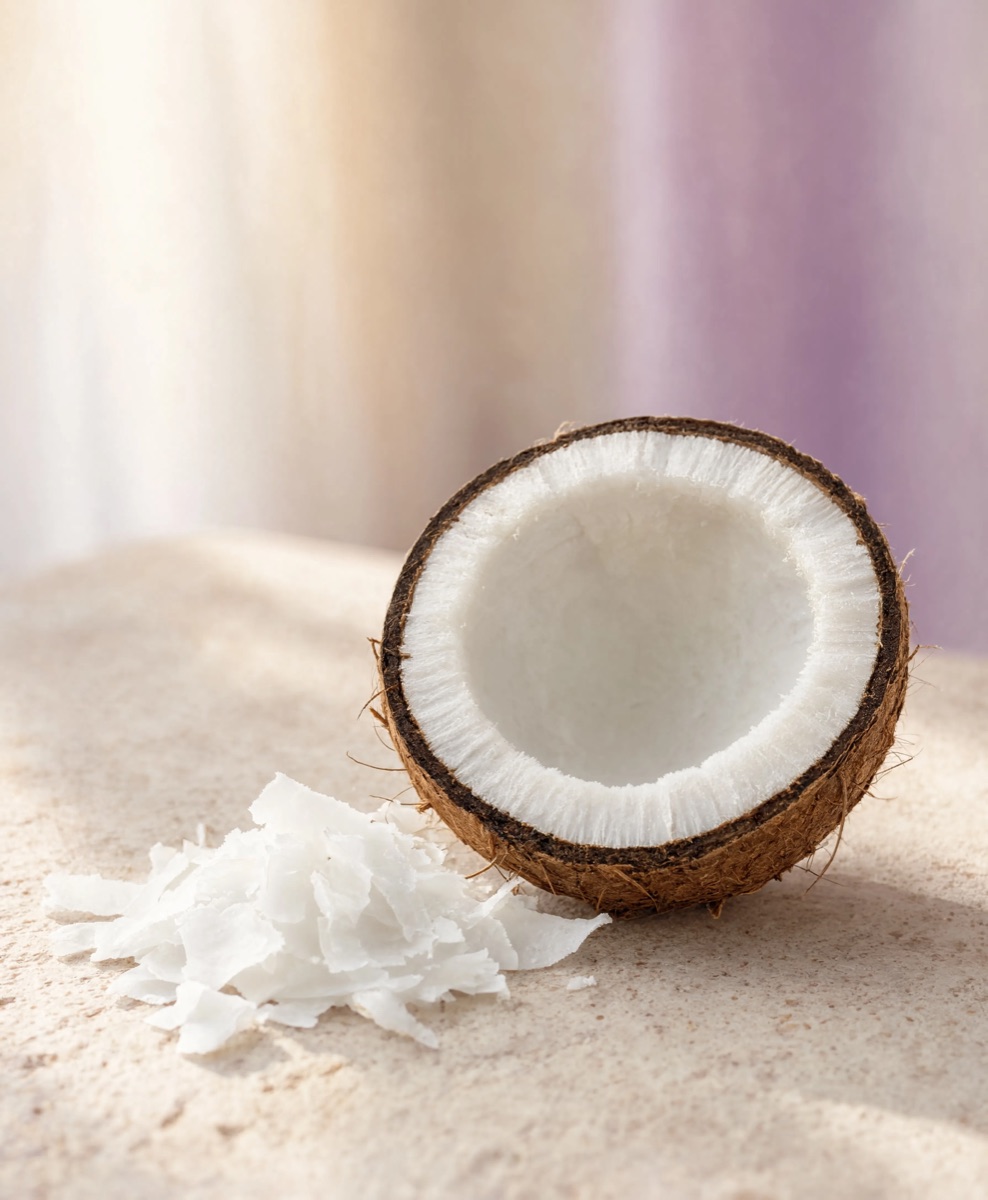
 Coconut flesh is where the oil comes from. Photo: Ivar Leidus / Wikimedia Commons (CC BY-SA 4.0)
What is coconut oil?
Coconut oil is the natural fat pressed from the white flesh of mature coconuts. People across the tropics have used it on skin and hair for generations, long before it ever reached a store shelf. It's simple, plant-based, and needs nothing added to do its job.
At cool room temperature it's a soft white solid. Near skin temperature it melts clear. That's the same trick raw shea butter pulls off, and it's a big part of why the two work so well side by side: both glide on and sink in instead of sitting on top of your skin.
What coconut oil does for skin
Every ingredient in a SARMARI'S jar has to earn its place. Here's how coconut oil earns its:
- Light, fast hydration. Coconut oil is thinner than butters like shea and cocoa, so it spreads easily and absorbs quickly. Skin feels soft in minutes, not slick for hours.
- Softer texture in the jar. Blended into whipped butter, it loosens the dense shea so the whole thing scoops and spreads like a cloud.
- A smoother finish. It leaves skin feeling supple with a low, natural sheen rather than a heavy gloss.
- Simple and familiar. One plant, one pressing. No mystery on the ingredient list.
How coconut oil is made
It starts with the flesh. Mature coconuts are cracked open, and the white meat inside is either pressed fresh or dried first and then pressed. The fresh method, often called cold pressing, squeezes the oil out without high heat, which keeps more of the coconut's natural character. The result is a clean, faintly sweet oil that melts the moment it touches warm skin.
That low melting point matters more than it sounds. An oil that stays solid on skin feels waxy. An oil that melts at skin temperature disappears into it. Coconut oil, like shea, is built to do the second thing.
Why it's in every whipped butter we make
Every SARMARI'S whipped body butter starts from the same base: raw shea butter folded with cold-pressed oils, coconut among them. Shea brings the deep, lasting moisture. Coconut oil brings the lightness, thinning the blend just enough that it whips up airy and absorbs fast instead of lingering on the surface.
Take coconut oil out and the butter would still moisturize, but it would feel denser, spread shorter, and take longer to settle in. The blend works because heavy and light ingredients balance each other. If you're curious how the whole recipe comes together, our guide to whipped body butter walks through it step by step. Or skip straight to the purest version of the base itself, the Shea Blend.
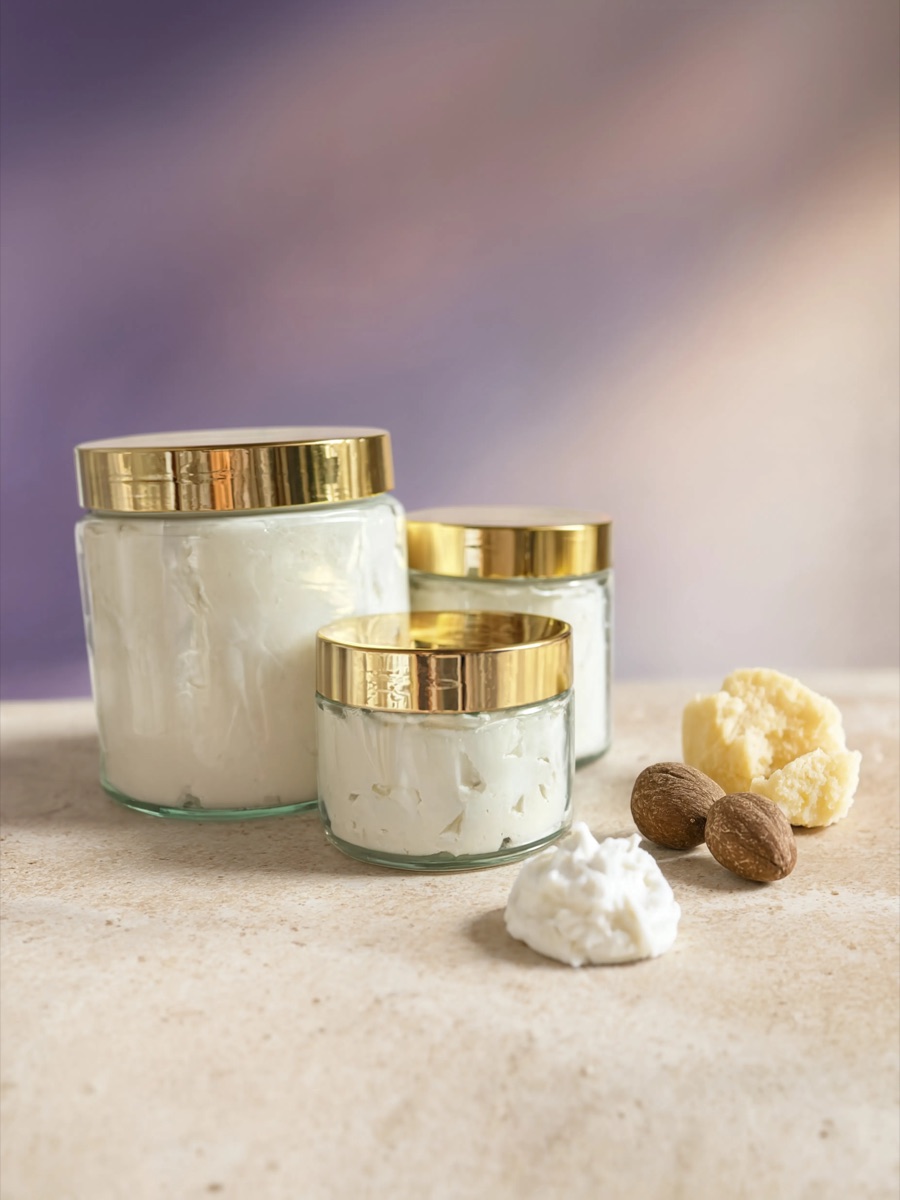
Whipped Body Butter
Shea Blend
Pure whipped shea, nothing else hiding in it. From $15.
Shop →
Coconut oil in a bar of soap
Coconut oil has a second life in our collection: it helps a bar of soap lather. In our Oatmeal Soap, coconut oil is part of what turns a gentle bar into a soft, generous foam, while colloidal oatmeal keeps the whole experience calm and comfortable for sensitive skin. Rich lather without harshness is a hard balance to strike, and coconut oil is a big part of how we strike it.
How to get the most from coconut oil
- Apply to damp skin. Right after a shower, oils and butters seal in the water your skin just soaked up.
- Let the blend do the work. In a whipped butter, coconut oil is already balanced with richer ingredients. A small scoop covers a lot.
- Don't fear the melt. If your jar softens in warm weather, a few minutes in the fridge firms it right back up.
- Patch test first. New to any ingredient? Test on your inner arm for 24 to 48 hours before regular use.
Questions people ask
Is coconut oil good for dry skin?
Yes. Coconut oil delivers lightweight hydration that absorbs quickly, so skin feels soft instead of coated. In our whipped butters it works alongside raw shea, which brings the deeper, longer-lasting moisture.
Will coconut oil make my skin feel greasy?
Not the way we use it. Coconut oil is one of the lighter oils in our blend, and whipping folds it into the shea base so it spreads thin and sinks in fast. Start with a small amount and your skin should feel soft, not slick.
Why does coconut oil turn liquid sometimes?
Coconut oil melts at about 76 degrees Fahrenheit, just below body temperature. On a warm day it turns clear and liquid, and in a cool room it firms back up. Nothing is wrong with it either way, and the same is true for a jar of whipped butter that softens in summer.
Can coconut oil feel too heavy for some skin?
Used straight from the jar on its own, coconut oil can sit heavily on some skin types. That's one reason we blend it rather than bottle it alone. If your skin is easily upset, patch test any new product on your inner arm for 24 to 48 hours first.
This page shares general information about cosmetic ingredients. It isn't medical advice, and our products aren't intended to diagnose, treat, cure, or prevent any condition. If you have a skin concern, talk with your doctor or dermatologist.