 Patchouli (Pogostemon cablin) in flower. Photo: Valérie75 / Wikimedia Commons (CC BY-SA 3.0)
What is patchouli?
Patchouli is a bushy, soft-leaved herb in the mint family, grown mostly in Indonesia, India, and the Philippines. Brush past the living plant and you'd barely guess what's coming: fresh patchouli leaves smell green and faintly minty, nothing like the deep scent the world knows.
That scent comes later. Patchouli essential oil, the ingredient we actually use, is distilled from the leaves, and what happens to those leaves before distillation is where the character is built.
Fermented, dried, and deeper for it
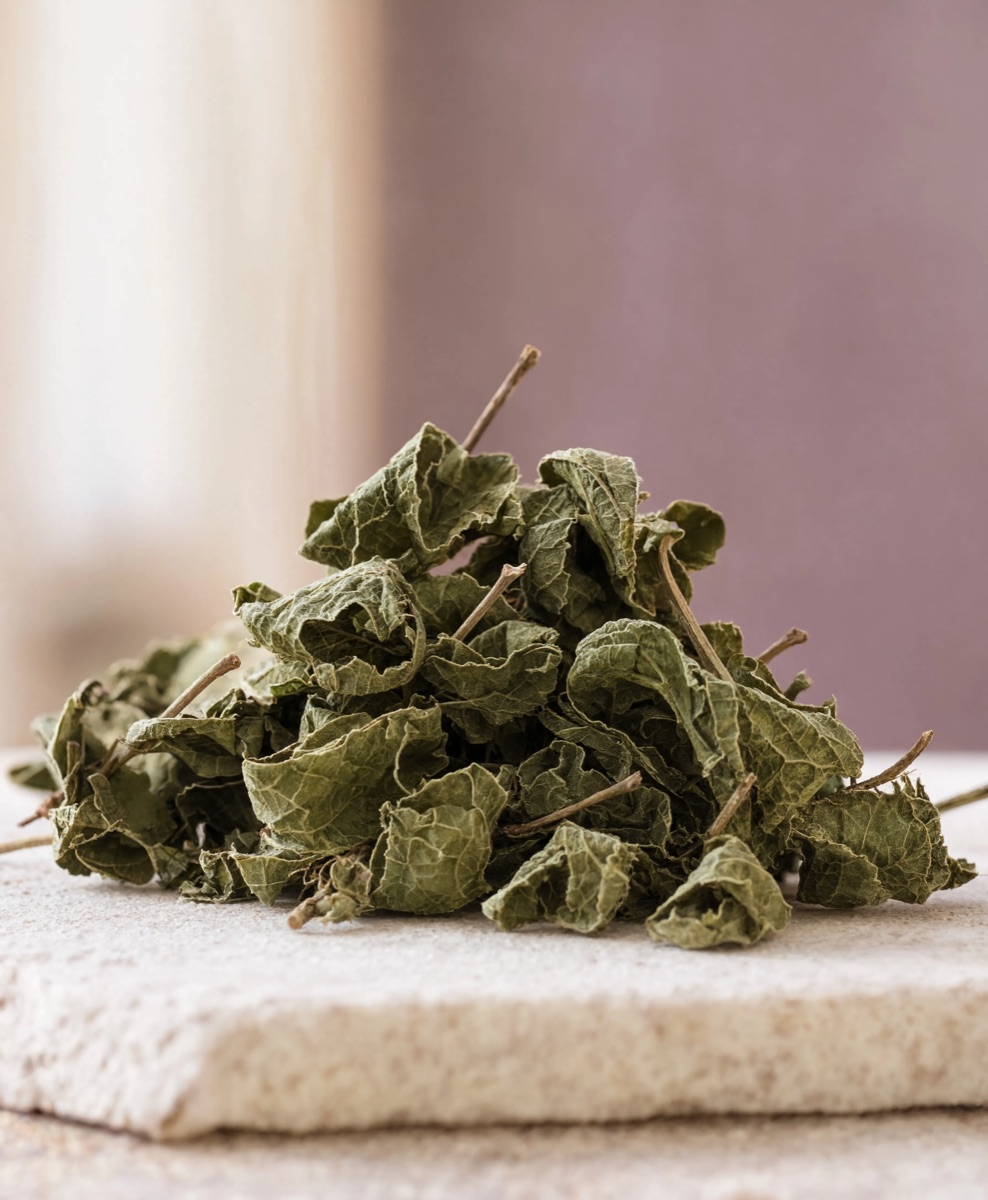
Most essential oils are pressed or distilled from fresh plant material and prized for smelling exactly like the living plant. Patchouli goes the other way. After harvest, the leaves are dried and lightly fermented, stacked and turned over several days so they break down before they ever reach the still.
That extra step is what builds patchouli's signature depth. Fermentation transforms the leaf's light green scent into something far richer: warm, dark, and full, with layers a fresh leaf simply doesn't have. Few natural ingredients are improved this much by patience, and patchouli rewards it twice, because the finished oil keeps mellowing and rounding as it ages. Perfumers store patchouli for years on purpose, the way winemakers cellar a good vintage.
What patchouli smells like
Deep, warm, and herbal is the honest shorthand. People reach for images of the earth itself: rich soil after rain, dried autumn leaves, worn wood. Underneath the earthiness sits a soft sweetness that first-timers rarely expect.
On skin, patchouli behaves differently from bright notes like citrus, which flash and fade within the hour. Patchouli is a base note, the slow layer at the bottom of a fragrance, so it lingers gently for hours and turns softer and warmer as the day goes on. A scent that improves as it wears is rare, and it's the main reason patchouli has never left the perfumer's shelf.
About that 1960s reputation
Say "patchouli" and someone will picture incense smoke and a certain decade. Fair enough: in the 1960s and 70s, patchouli oil was cheap, everywhere, and often worn straight from the bottle in quantities no perfumer would recommend. The heavy haze people remember was a dosage problem, not an ingredient problem.
Modern use looks nothing like that. Today patchouli quietly anchors many well-known fine fragrances in small, measured amounts that add warmth and staying power without announcing themselves. Used with a light hand, patchouli doesn't smell like a head shop. It smells like depth.
Who patchouli is for
Patchouli tends to win over two kinds of people: those who already love earthy, natural scents, and those who thought they disliked fragrance altogether until they met a quiet one.
- Lovers of the outdoors. If wood, rain, and trail are your happy place, patchouli is that in a jar.
- People worn out by sweet scents. No sugar, no dessert, no bouquet. Just warmth.
- Anyone who wants a close scent. Patchouli stays near the skin, a private detail rather than an announcement.
How we use patchouli at SARMARI'S
In our Earthy Scent whipped body butter, patchouli plays the bass line. We layer it with sandalwood essential oil, whose creamy smoothness rounds off patchouli's herbal edge, so the finished scent lands grounded and warm without a hint of heaviness.
The moisture comes from the base underneath: raw shea butter folded with cold-pressed coconut, avocado, grapeseed, castor, and olive oils plus cocoa butter, whipped until soft. The essential oils go in last, measured for warmth rather than volume. If you're new to whipped butters, our whipped body butter guide covers how to apply and store them.
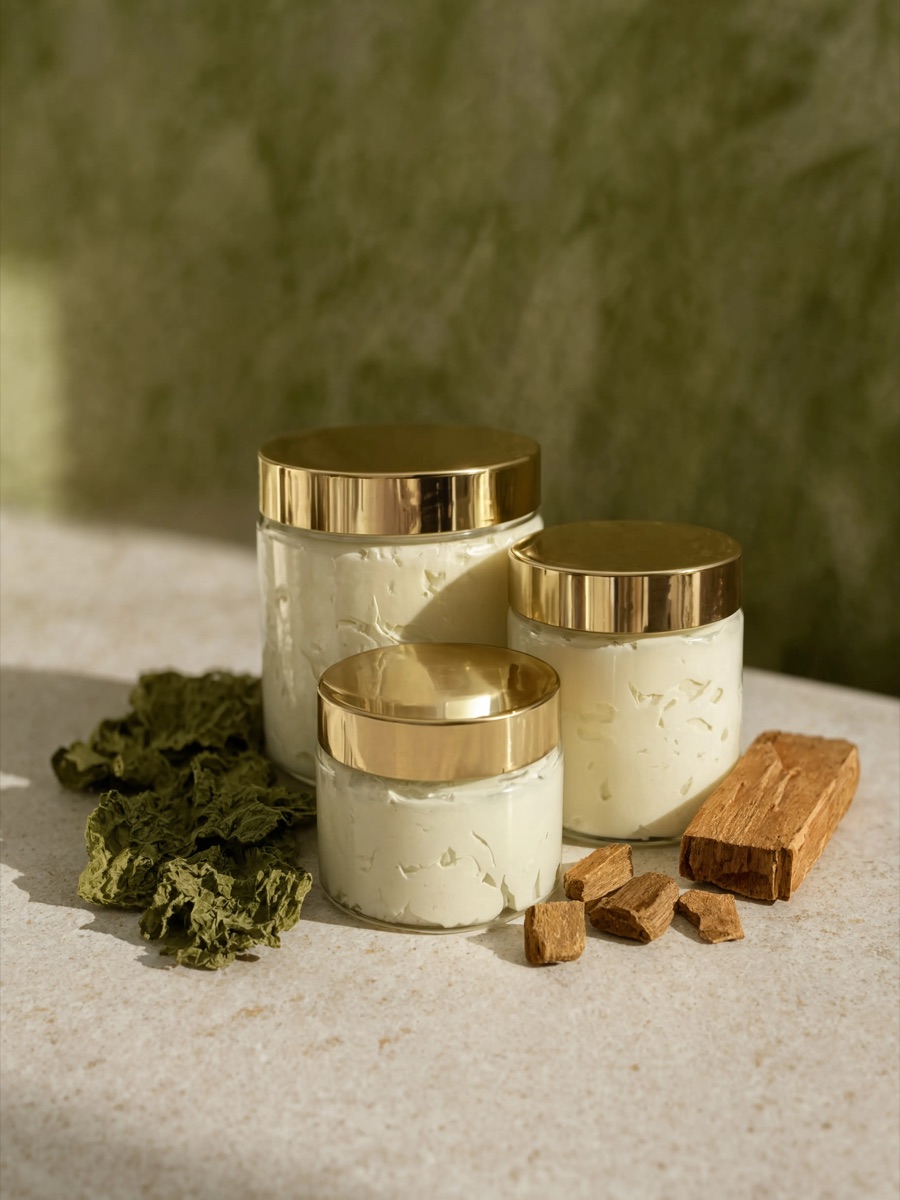
Whipped Body Butter
Earthy Scent
Grounded, natural, quietly warm. From $15.
Shop →
Questions people ask
What does patchouli oil smell like?
Deep, warm, and herbal, with an earthy sweetness underneath. People often compare it to rich soil, dried leaves, and old wood. In a well-made blend it reads as warmth rather than perfume, especially once it settles on skin.
Why is patchouli linked to the 1960s?
Patchouli oil was inexpensive and easy to find in that era, so it was often worn straight and heavily, and the association stuck. Modern blends use a small, measured amount, which gives you the depth without the haze of incense.
How long does patchouli last on skin?
Longer than most natural scents. Patchouli is a classic base note, the layer of a fragrance that outlasts everything else, so a whipped butter scented with it carries a soft trace of warmth through the day instead of vanishing in an hour.
Which SARMARI'S product has patchouli in it?
Our Earthy Scent whipped body butter. It blends patchouli and sandalwood essential oils into the same raw shea and cold-pressed oil base we use in every butter, so you get a grounded, natural scent with deep everyday moisture.
This page shares general information about cosmetic ingredients. It isn't medical advice, and our products aren't intended to diagnose, treat, cure, or prevent any condition. If you have a skin concern, talk with your doctor or dermatologist.